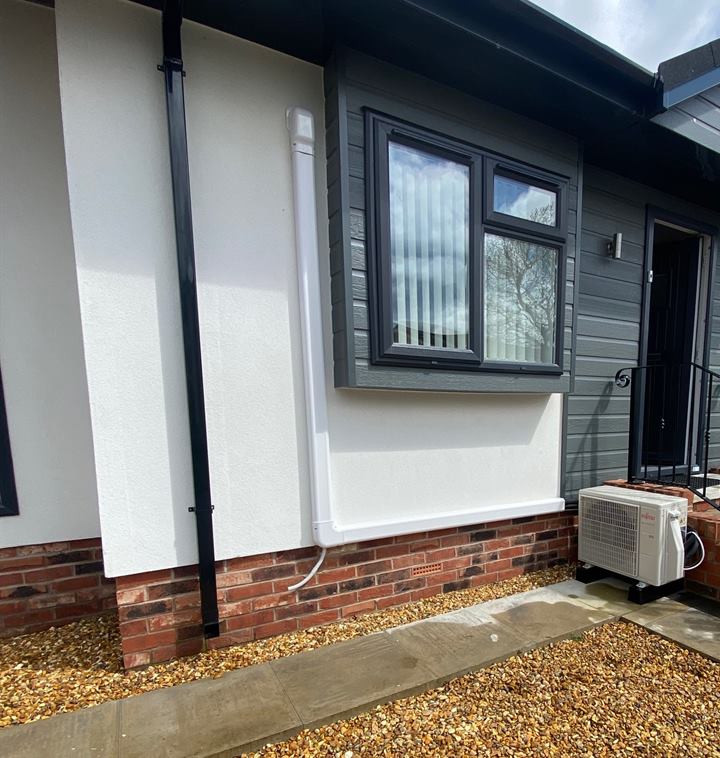
Park homes warm up fast and lose it just as quickly. One quiet wall unit cools the room in summer, heats it for less than bottled gas in winter — and there's no wet system, no flue and not a single radiator.
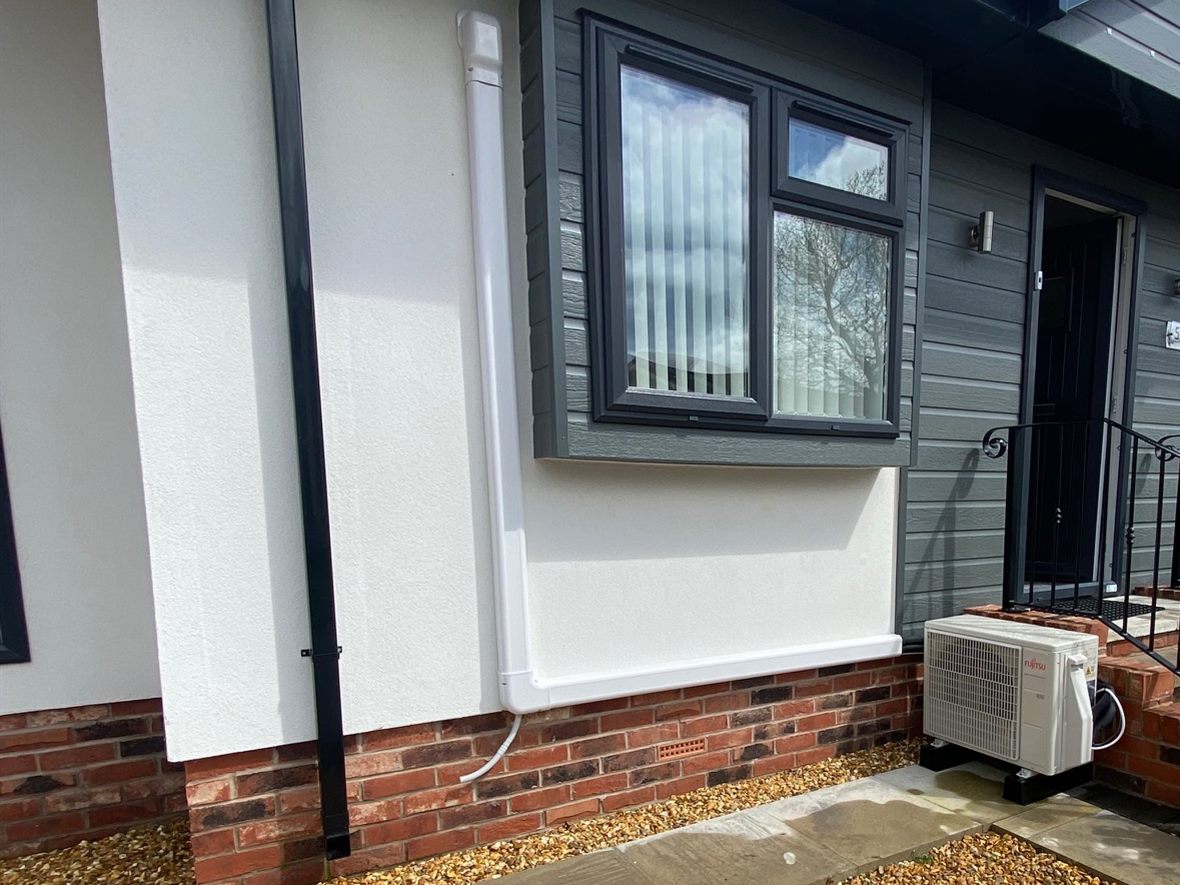
A park home we fitted · Mossways Park, WilmslowResidential parks, holiday parks and lodge sites across Cheshire, the North West and North Wales.
A park home is a wonderful thing to live in — but it isn't built like a brick house. Slimmer walls, a low-pitched roof and plenty of glazing mean the sun gets in quickly and the heat has nowhere to go. By mid-afternoon in July the lounge can be unbearable, and a fan just moves the warm air around.
Winter is the other half of the problem. Most park homes lean on bottled LPG, oil or electric panel heaters — all of which cost a fortune to run, and none of which do anything at all for you in summer.
An air-to-air heat pump solves both ends of the year with one small system. It cools properly in summer, and in winter it moves heat into the home rather than burning fuel to make it — typically producing around three times more heat than the electricity it uses.
Ground-mounted on feet, not hung off the wallSmall, light, quiet and quick to fit — without disturbing the structure or lifting a single floor panel.
Heating with a heat pump usually undercuts LPG, oil and electric panel heaters by a wide margin — so the system pays its way through the winter as well as the summer.
Nothing to plumb in, no tank, no radiators and no floor to lift. Two small pipes, one neat cored hole through the wall, and that's the extent of it.
Indoor units weigh very little and we fix into the structural framing, not just the board. The outdoor unit normally stands on the ground beside the home rather than hanging off the cladding.
Modern units run from as low as 16–19 dB(A) indoors on their quietest setting, and we choose and site the outdoor unit with your neighbours in mind.
Single-room installs are almost always a one-day job, with everything cleared away before we leave.
We measure the rooms, look at the wall build-up, check the incoming electrical supply and consumer unit, and agree exactly where both units will sit.
We give you the model details, dimensions and noise figures, and tell you where the outdoor unit will sit — the details you need to submit for written sign-off from the site owner.
Indoor unit on the wall, one small cored hole sealed and sleeved, pipework and condensate run away discreetly in trunking to match the cladding.
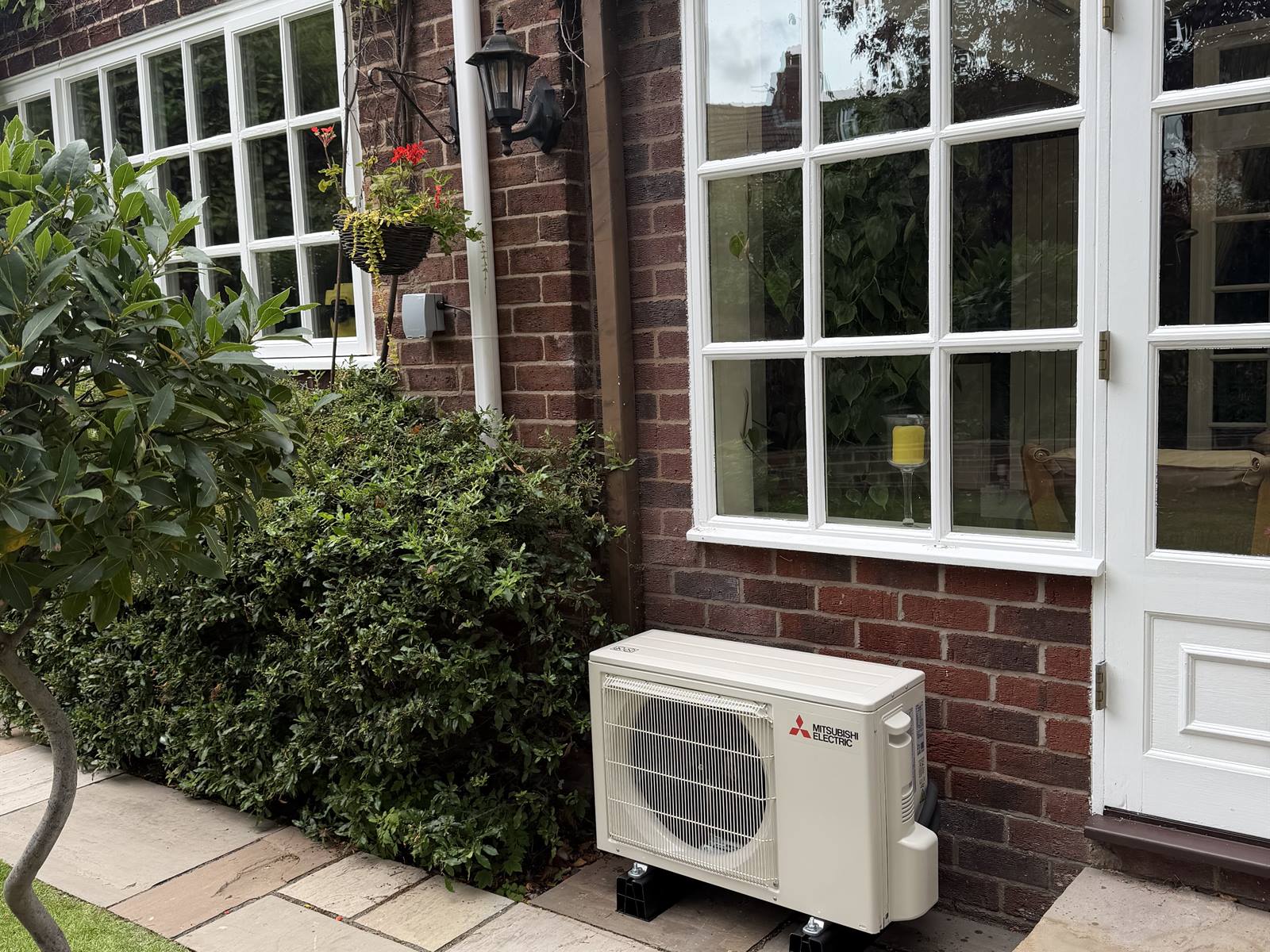
Level on a ground stand or slab beside the home, clear of windows and pathways, with the airflow clearance the manufacturer asks for.
Pressure test, vacuum, charge checked and performance verified by an F-Gas registered engineer — with your paperwork handed over on the day.
A proper walk-through of the controls and the cheapest way to run it, then annual servicing whenever you want it.
Nearly every park and site licence requires written consent from the site owner before anything is fixed to the outside of a home. It's rarely a problem — the units are small, quiet and fully removable — but it's much easier to ask before you book than after.
If you need to apply for permission, speak to us first and we can provide the details for you to submit — the unit's dimensions and sound levels, and the manufacturer's specification sheet — so the park can see exactly what is being proposed.
Almost always, yes. Most pitch agreements and site licences require written consent before anything is attached to the outside of the home. Refusals are uncommon once the park sees how small and quiet a modern unit is. If you need to apply, we can provide the details for you to submit — the unit's dimensions and sound levels, and the manufacturer's specification sheet.
Yes. Indoor units are light and we fix into the structural framing rather than relying on the wall board. Outdoor units normally sit on a stand or slab on the ground next to the home, so nothing heavy is hung off the cladding. We confirm all of this at the survey before quoting.
In normal running a single-room system draws less than a kettle, and far less again once the room reaches temperature. Park home supplies do vary, though, so we check the incoming supply and consumer unit at your survey — no surprises on install day.
Yes — these are air-to-air heat pumps, so they heat as well as cool and keep working well below freezing. For a lot of park homes it's the cheapest way to heat the main living space, and it's instant: no waiting for a system to warm up.
Not at all. Holiday lodges and static caravans are straightforward. There's no water in the system, so nothing to drain down — shut it off over winter, or leave it on a low setting to keep the chill and damp out while you're away.
Fitted properly, no. The only penetration is a single small cored hole, sealed and sleeved, and the system can be removed if you ever move on. In practice most buyers see air conditioning on a park home as a plus rather than a problem.
Samsung, Mitsubishi Electric, Hitachi and Fujitsu — in white, black or a floor console where a high wall unit won't suit the room. Have a look at the systems we install.
It depends on the size of the room and how many rooms you'd like doing. The quote builder gives you an instant guide price in under a minute, and we'll confirm it properly at a free, no-obligation survey.
★★★★★
"Matthew installed an A/C unit for us and we could not be more delighted. Not only is the Samsung unit whisper-quiet, but it's so energy efficient. We'll definitely be using his services again."
"Matthew has just fitted an aircon/heat-pump unit to my garden room. A nice tidy installation and he explained everything very clearly. Very pleased with his work. Highly recommended."
"We needed a quote for a heat pump for my mum's annexe. Matthew gave a very competitive quote and we're really pleased — a much better heating system at a lower running cost. Highly recommended."
Matthew spent over a decade installing air conditioning in the South of France — villas and park homes alike, in serious heat. More about us.
Get a free, no-obligation survey and an instant price guide in under a minute.
Build your quote